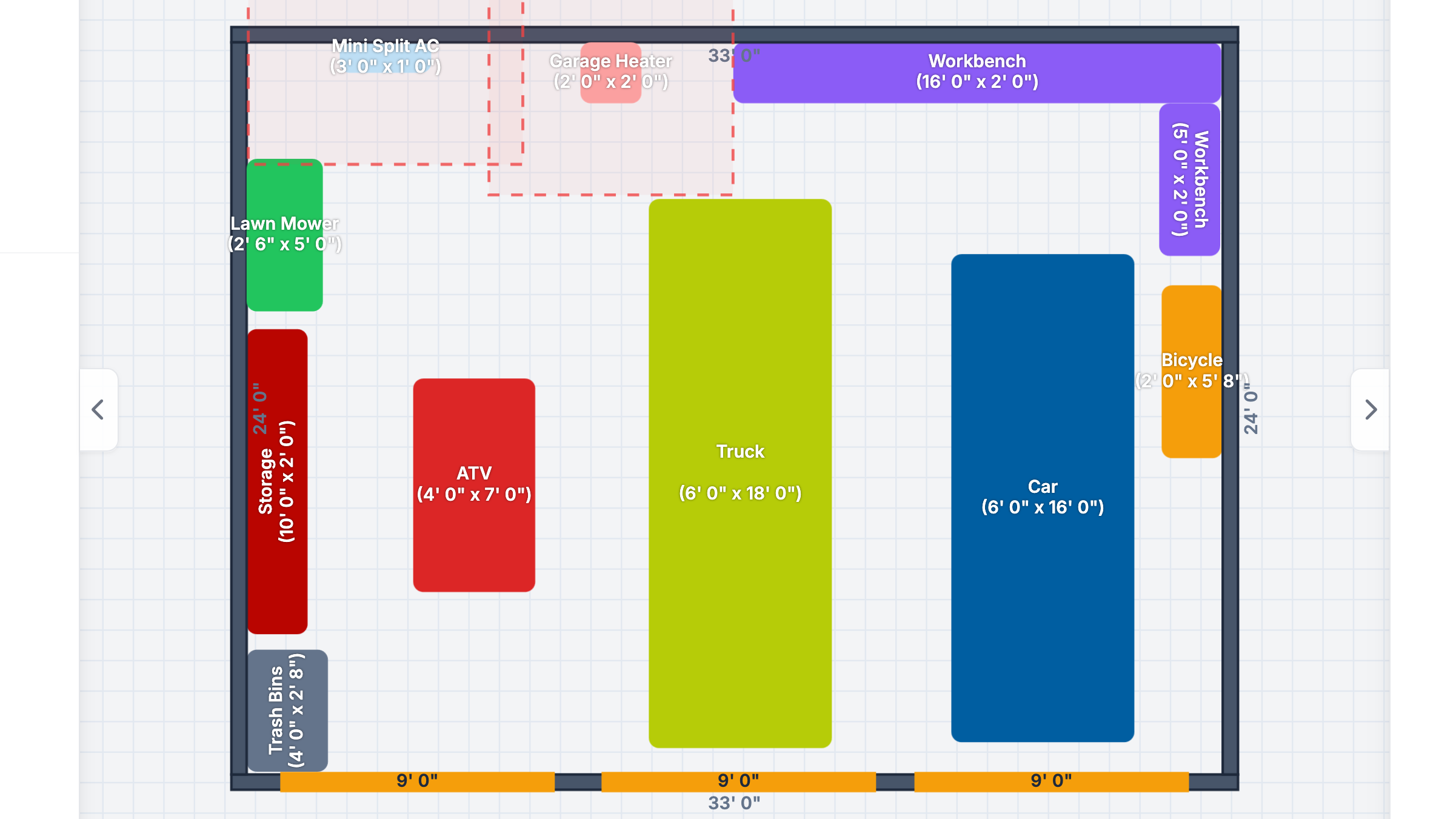
A heated garage changes how you use it: winter wrenching stops being a character-building exercise. But garages are the worst-insulated rooms in most houses, so sizing and choosing the heater matters more here than anywhere else in the home.
Step One: Insulation Beats Heater Size
Before picking a heater, know what you are heating. An uninsulated garage with a steel door loses heat roughly as fast as you can make it. The upgrades that matter, in order:
- Insulated garage door (polyurethane-core doors run R-12 to R-18 vs ~R-6 for cheap insulated steel and ~R-0 for bare steel).
- Walls at R-13 to R-19, ceiling at R-30 to R-49 if the space above is unconditioned.
- Weatherstripping and a threshold seal — a 1-inch gap under a 16-foot door is a hole the size of a folder of paperwork.
BTU Sizing: The 40-Rule and the Honest Version
A common rule of thumb is 40 BTU per square foot for a well-insulated garage in a moderate climate, scaling to 60–80+ BTU/sq ft for uninsulated spaces or very cold regions. Realistic targets:
| Garage | Well-Insulated | Average | Uninsulated |
|---|---|---|---|
| 1-car (12' × 22') | ~10,000 BTU | 15,000–20,000 | 25,000+ |
| 2-car (22' × 24') | ~20,000 BTU | 30,000–40,000 | 50,000+ |
| 3-car (36' × 24') | ~30,000 BTU | 45,000–60,000 | 75,000+ |
Undersizing means the garage never gets warm; oversizing a gas unit means short cycling. When in doubt on a modulating mini-split, one size down is usually the right call.
The Three Main Options Compared
Mini-split heat pump
The modern default. A 12,000 BTU (1-ton) unit handles a well-insulated 2-car; 18,000 BTU covers most insulated 3-car garages in moderate climates. Pros: heat and air conditioning, quiet, extremely efficient (SEER2 20+), wall-mounted with a 3-inch line-set hole. Cons: higher up-front cost ($2,500–5,000 installed), and output drops in sub-zero weather unless you buy a cold-climate model.
Forced-air unit heater
The classic garage solution: a gas or electric unit heater hung from the ceiling, blowing warm air across the space. A 30,000–45,000 BTU gas unit warms a 2-car fast and costs $600–1,500 installed where gas exists. Cons: it blows (dust, chips, and wood shavings go airborne), it needs headroom and venting, and it heats air, not objects — the space cools quickly between uses.
Radiant (floor heat or panels)
Hydronic floor heat is the luxury pick: silent, invisible, and the concrete itself becomes the radiator. Electric radiant panels and low-intensity tube heaters warm objects and people directly, so they work well in leaky spaces. Cons: floor heat is expensive to retrofit (it wants to be in the slab pour) and slow to respond. Note that heated slabs need expansion planning just like the layout planning you do in our tool.
Plan the Heater's Footprint Too
Unit heaters, mini-split clearances, and 30-inch furnace service zones all eat wall space. Place them in the layout before the installer does.
Open Free Garage PlannerSafety Notes That Are Non-Negotiable
- Never use unvented propane or kerosene "torpedo" heaters in a closed attached garage — carbon monoxide and water vapor both end up indoors.
- Gas units need combustion air and proper clearance from combustibles; check the plate on the unit.
- If the garage houses a furnace or water heater, keep storage clearances around them and install a CO detector.
Pair the heat with light: our workshop lighting guide covers making the space usable after dark, which is most of the winter.
Running Cost: The Comparison Nobody Posts
Up-front price is the easy number. The one that matters for a decade is cost per hour of heat, and it depends on local fuel prices as much as on the equipment. The relative picture in most of North America:
| Heat Source | Typical Efficiency | Relative Running Cost |
|---|---|---|
| Natural gas unit heater | ~80% AFUE | Lowest where gas is cheap; short cycling hurts |
| Propane unit heater | ~80% AFUE | Roughly 1.5–2× natural gas per delivered BTU |
| Electric resistance (5 kW) | ~100% | Highest cost per BTU, cheapest to install |
| Mini-split heat pump | COP 2.5–4.0 above freezing | Often about half of resistance heat; falls off as it gets colder |
Two practical notes hide in that table. First, a heat pump only wins if the space is heated continuously, because bringing a cold garage up to temperature leans on the least efficient mode the unit has. Second, electric resistance heat is cheap to install and expensive to run, so it makes sense for occasional use and rarely makes sense for daily warmth.
Keeping the Heat You Paid For
Insulation and air sealing are the whole game; a heater only replaces the heat that escapes. The two biggest leaks in a garage are the door and the ceiling:
- The door: an insulated polyurethane-core door is the single best upgrade, and it only works with good weatherstripping on the sides, top, and bottom threshold. Test the seal with a slip of paper — if it slides out easily, cold air is coming in.
- The interface with the house: seal the gap under the house door, air-seal the common wall, and never let garage air migrate into living space. That is a comfort issue and a safety issue when cars run in the space.
- Cycle smart: holding a garage at 45–50°F continuously costs far less than repeatedly reheating it from outside ambient, and it protects paints, tools, and stored goods from condensation.
- Move the air: a ceiling fan or small circulation fan on low fixes the most common complaint about unit heaters — hot air at the ceiling, cold feet at the bench.
If electricity is part of the plan, our workshop wiring guide covers how heater circuits, dedicated receptacles, and detector placement are usually planned together.